
Do You Need a Permit to Remodel a Bathroom in Utah?
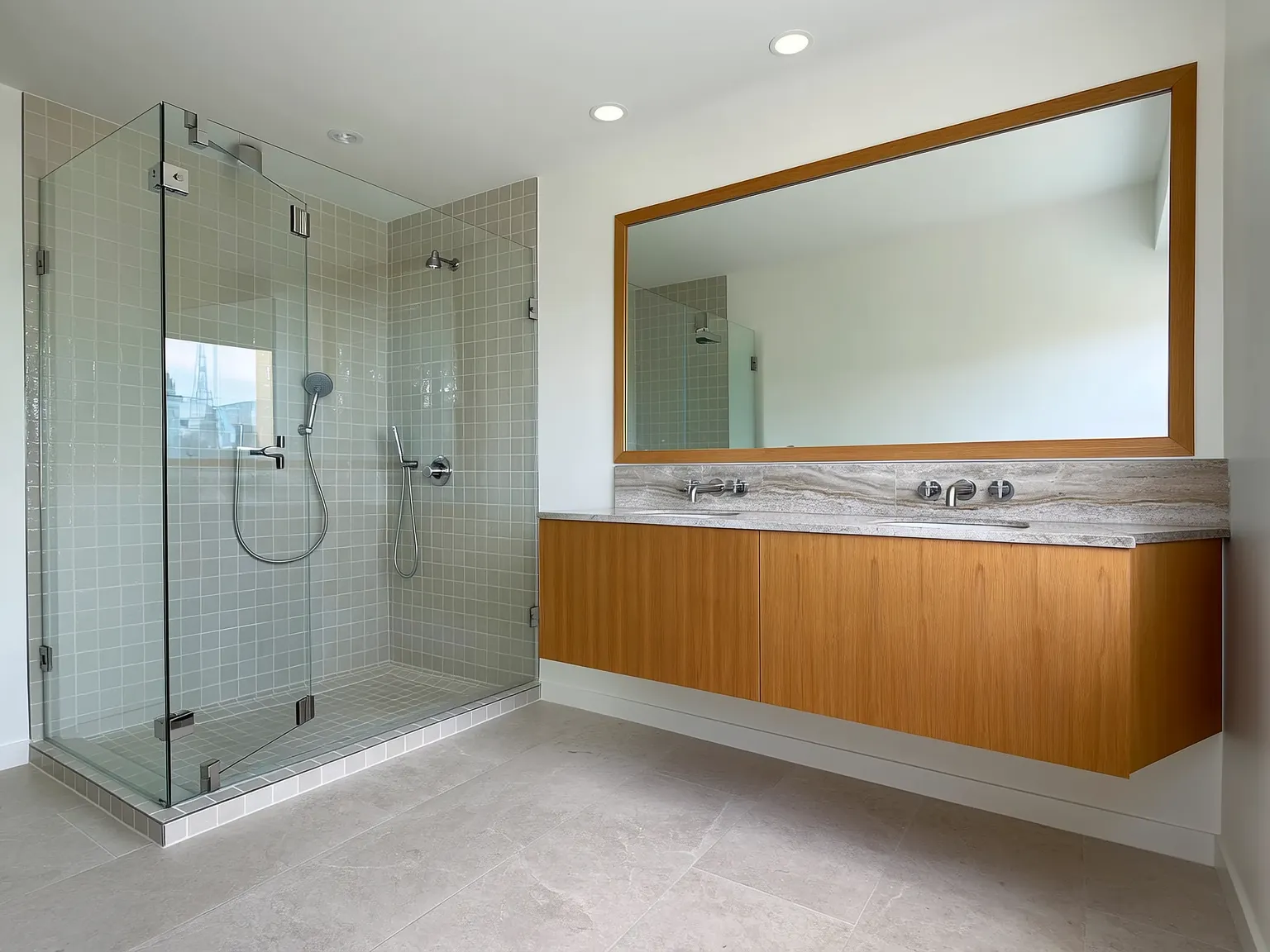
Yes, if the remodel moves plumbing, adds or changes an electrical circuit, or touches structural framing or ventilation. A cosmetic swap, like new tile in the same layout or a same-size vanity, usually does not need one. Utah cities enforce that rule under International Residential Code Section R105, and Construction Solutions of Utah pulls the permit under its own license either way.
Do you need a permit to remodel a bathroom in Utah?
Every Utah city has to follow International Residential Code Section R105. Under that rule, a bathroom remodel needs a permit the moment it touches plumbing, an electrical circuit, or the structure and ventilation behind the walls. New tile in the same footprint or a same-size vanity swap usually stays exempt, since it never touches those systems.
Permit fees in Utah depend on the size and scope of the job, not one flat number. As of 2026, an electrical-and-plumbing permit package tends to run $400 to $1,200 across Salt Lake, Davis, and Utah County. One third-party cost guide prices a $15,000 Salt Lake City bathroom project's full permit package, building, electrical, plumbing, and mechanical review together, at $883.11. That is a general estimate, not a promise. Call for a free written estimate and get the real permit cost for your own project before you sign anything.
What bathroom work needs a permit, and what doesn't?
Three kinds of work trigger a permit under the state code. Moving a toilet, sink, showerhead, or tub needs a plumbing permit. So does adding a fixture where none existed. That work reroutes the drain line and the vent system behind the wall. Adding a new outlet, moving an outlet, rewiring an exhaust fan, or adding heated flooring needs an electrical permit under the National Electrical Code. Moving a vent duct, cutting a stud, or raising the ceiling needs a permit too. That kind of work changes the room's frame or its air flow.
Work that leaves all three of those systems alone usually skips the permit. Pulling off old tile and laying new tile in the same spot is cosmetic work. So is swapping in a vanity the same size, in the same footprint. A mirror swap is cosmetic too. Most Utah cities do not require a permit for any of that.
Construction Solutions of Utah checks your bathroom against that list at the free estimate visit. That happens before any wall comes down, so you know up front whether your project needs a permit.
How does the bathroom permit process work in Salt Lake City and Kaysville?
Both cities follow the same state rule. Each one then runs the review through its own office.
Salt Lake City. Permits go through the city's own Building Services office at City Hall. You file online, and the city targets a 14-business-day first review for a one- or two-family home. Plan for about three weeks before demolition starts on a bathroom job that needs a permit.
Kaysville. Permits here route through the city's own building department, not Davis County. You file plans online. Review typically takes about two weeks. Inspections need 24 hours' notice, and there is no same-day option.
Two cities follow the same state-level permit trigger. Each one adds its own office and timeline on top of it. Build that review window into your schedule from the first sales call. Do not treat it as a surprise once the vanity is already out.
What happens if you remodel a bathroom without a permit?
Utah building departments can red-tag a job and shut it down once they find work with no permit. If the work breaks zoning or code, the city can order it torn back out. That risk does not go away once the room looks finished. At resale, a mismatch between county records and the real finished space can surface years later. That can mean back permit fees, fines, and a buyer who walks away from the sale.
There is one more thing worth knowing. A licensed contractor who pulls the permit under its own license carries the code-compliance duty. A homeowner who pulls the permit alone carries that duty instead, even on work a contractor's crew performs. For a bathroom, that permit covers the plumbing move behind the wall, the drain and vent reroute an inspector will not see once the tile is back. Construction Solutions of Utah pulls it under license 14241087-5501, so if anything fails a code check, that is on the company, not on you.
Contact Construction Solutions of Utah for a free, written estimate on your bathroom remodel, permit included.
Family owned, veteran owned, and based in Bountiful, the crew handles bathroom remodeling across the Wasatch Front, through Salt Lake City's own permit review process and Kaysville's Community Development Building Department. See what a bathroom remodel costs in Utah for the build-cost side of the project.
Talk to Construction Solutions of Utah
Questions about your general contractor & remodeling job? We serve Bountiful and the surrounding area with honest, upfront advice.
Related articles
FAQ
Related questions
What can a homeowner do without a permit?
Cosmetic work that leaves plumbing, wiring, and framing alone. Pulling off old tile and laying new tile in the same spot, swapping in a vanity the same size as the old one, and swapping a mirror all stay exempt. The moment a fixture moves or a wire gets added, that exemption ends.
Do you need a permit to replace a bathtub with a shower?
Yes. A tub-to-shower conversion moves the drain and the trap. That counts as a plumbing fixture relocation, and it reroutes part of the vent system behind the wall. It needs a plumbing permit, even though the room looks like a simple swap from the outside.
Does painting or tiling a bathroom need a permit?
No, as long as the tile goes back in the same layout and no fixture moves. Paint, new tile on the same floor plan, and a same-size vanity swap are the kind of cosmetic work that skips a permit in most Utah cities.
Who is responsible for code compliance if I pull the permit myself instead of the contractor?
You are. When a licensed contractor pulls the permit under its own license, that contractor carries the code-compliance responsibility. When a homeowner pulls an owner permit instead, that responsibility shifts to the homeowner. That is true even if a contractor's crew does the actual work.